
Parents are usually the first to notice when something feels different in their child’s development. It might be subtle—less eye contact, fewer words, or unusual play patterns. Understanding the early signs of autism in toddlers can help you take the right steps at the right time.
At Empower Them ABA, we’ve worked closely with families for over a decade, supporting toddlers at the earliest stages of development. Many parents we meet say the same thing: “I had a feeling, but I wasn’t sure.” This guide is built to give you clarity—real signs to watch for, what they mean, and what you can do next.
What Are the Early Signs of Autism in Toddlers?
Every child develops at their own pace, but certain patterns can indicate a developmental difference.
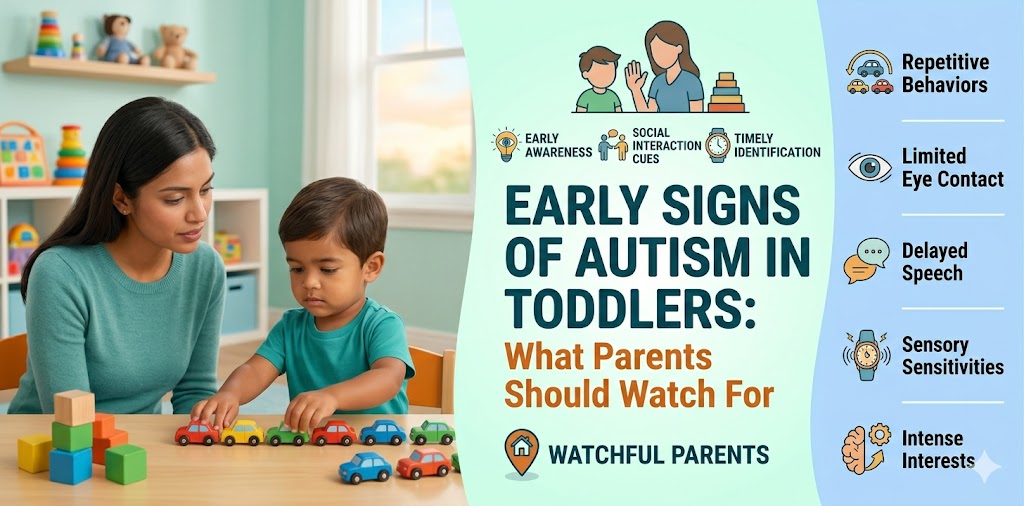
Here are some of the most common early signs of autism in toddlers:
Communication Signs
- Limited or no spoken words by 16–18 months
- Not responding to their name consistently
- Rarely pointing to show interest
- Limited use of gestures (waving, nodding)
Social Interaction Signs
- Avoiding eye contact
- Preferring to play alone most of the time
- Not showing interest in other children
- Limited facial expressions or emotional responses
Behavioral Patterns
- Repetitive movements (hand flapping, rocking)
- Strong attachment to routines
- Intense focus on specific objects
- Difficulty with transitions
Sensory Sensitivities
- Overreacting to sounds, textures, or lights
- Unusual reactions to pain or temperature
Not every child showing one or two of these signs has autism, but consistent patterns across areas are worth paying attention to.
Early Development Milestones Parents Should Track
In our day-to-day work with toddlers, we often guide parents to focus on practical developmental milestones instead of comparing children to others.
By 12–18 months, most toddlers:
- Respond to their name
- Use simple words like “mama” or “dada”
- Point to objects they want
- Show interest in people
By 18–24 months:
- Combine two words (e.g., “more juice”)
- Follow simple instructions
- Engage in basic pretend play
- Show a range of emotions
If your child is missing several of these milestones alongside the early signs of autism in toddlers, it’s a good idea to explore further evaluation.
Behavioral Red Flags That Often Get Missed
Some signs are less obvious and often overlooked, especially in early stages.
From our experience working hands-on with families, these are commonly missed:
Subtle but important signs:
- Using a parent’s hand as a tool instead of asking
- Lining up toys instead of playing with them
- Lack of imitation (not copying clapping or waving)
- Difficulty shifting attention from one activity to another
These behaviors may seem small, but they provide important insight into how a child learns and interacts with their environment.
Why Early Intervention Makes a Big Difference
One of the most important things we’ve learned over the years is this: timing matters.
Children’s brains are highly adaptable in early years. When support begins early, progress tends to be faster and more meaningful.
Benefits of early intervention:
- Improved communication skills
- Better social engagement
- Reduced challenging behaviors
- Stronger learning foundation
Applied Behavior Analysis (ABA), when started early, helps toddlers build essential skills in a structured, supportive way.
We’ve worked with children who began therapy before age 3 and saw major improvements in communication within months—not because of quick fixes, but because of consistent, targeted support.
Local Insight: What Parents Often Experience First
Working with families in our local communities, we’ve noticed a pattern:
- Parents often raise concerns early
- They’re told to “wait and see”
- Valuable time is lost
While every child develops differently, waiting without guidance can delay progress.
What we recommend:
- Trust your instincts
- Document behaviors you notice
- Seek a professional evaluation early
- Ask about early intervention options
Families who take action sooner often feel more confident and less overwhelmed because they have a clear plan moving forward.
What to Do If You Notice Early Signs
If you recognize multiple early signs of autism in toddlers, taking the next step doesn’t mean labeling your child—it means understanding their needs.
Practical steps:
- Talk to your pediatrician
- Request a developmental screening
- Seek an evaluation from a specialist
- Explore early intervention services
Tip from experience:
Bring videos of your child’s behavior to appointments. It helps professionals see real patterns, not just descriptions.
How ABA Therapy Supports Toddlers
ABA therapy is one of the most effective approaches for helping toddlers with developmental delays.
Focus areas:
- Communication (verbal and non-verbal)
- Social interaction
- Play skills
- Daily routines
What makes it effective:
- Individualized plans
- Consistent reinforcement
- Measurable progress tracking
At Empower Them ABA, we focus on making therapy natural and engaging—often through play and everyday interactions at home.
Frequently Asked Questions (FAQs)
1. What are the earliest signs of autism in toddlers?
Common early signs include limited speech, lack of eye contact, repetitive behaviors, and reduced social interaction.
2. At what age can autism be detected?
Some signs can appear as early as 12–18 months, though formal diagnosis may happen later.
3. Should I wait if my child is a late talker?
Not always. If speech delay is combined with other early signs of autism in toddlers, early evaluation is recommended.
4. Can early intervention really help?
Yes, early support can significantly improve communication, behavior, and social skills.
5. Is every delay a sign of autism?
No. Some children develop at different speeds, but consistent patterns across multiple areas should be evaluated.
Conclusion
If you’ve noticed early signs of autism in toddlers, taking action early can make a meaningful difference.
At Empower Them ABA, we:
- Provide personalized developmental assessments
- Create tailored therapy plans
- Support both children and parents every step of the way
👉 Book a free consultation today and get clear, expert guidance for your child’s development.